Understanding Flood Insurance and What to Do During a Flood
Floods are one of the most common and costly natural disasters in the United States. They can happen almost anywhere — not just in coastal areas or near rivers — and they often strike with little warning. Despite this, many homeowners and renters mistakenly believe that flood damage is automatically covered by their standard homeowners or renters insurance policy. It isn’t. That’s where dedicated Flood Insurance services come in, offering protection specifically designed for water-related disasters that standard policies leave out.
In this article, we’ll break down what flood insurance actually covers, why it matters even if you don’t live in a high-risk zone, and what steps to take before, during, and after a flood to keep your family and property safe.
What Is Flood Insurance?
Flood insurance is a specialized policy that covers physical damage to your home, belongings, or business caused by flooding — whether from heavy rainfall, overflowing rivers, storm surge, snowmelt, or drainage system failures. Unlike homeowners insurance, which typically covers wind, fire, and certain water damage from burst pipes, flood insurance fills the gap left behind for water that enters a home from the outside.
There are two main sources for flood coverage:
- The National Flood Insurance Program (NFIP), managed by FEMA, which offers standardized policies through participating insurance providers.
- Private flood insurance, which is increasingly available and can offer higher coverage limits, broader protection, and more flexible terms than NFIP policies.
Working with an experienced agency that offers comprehensive Insurance services can help you compare these options and determine which fits your property, budget, and risk level best.
Do You Really Need Flood Insurance?
A common misconception is that flood insurance is only necessary for people living in designated high-risk flood zones. In reality, more than 20% of flood insurance claims come from properties outside high-risk areas. Heavy rains, rapid urban development, and changing weather patterns mean that flooding can affect nearly any home or business.
Consider flood insurance if:
- Your home is located in or near a floodplain, river, lake, or coastline.
- Your area has experienced heavy rainfall, hurricanes, or rapid snowmelt in the past.
- Your mortgage lender requires it (common in FEMA-designated Special Flood Hazard Areas).
- You want peace of mind and financial protection against a disaster that isn’t covered by standard policies.
Because flooding is unpredictable, it’s wise to consult with an agency specializing in Flood Insurance services to assess your property’s specific risk and coverage needs, rather than assuming you’re safe based on location alone.
What Does Flood Insurance Typically Cover?
Most flood insurance policies are divided into two categories:
1. Building Property Coverage This protects the physical structure of your home, including:
- Foundation and structural elements
- Electrical and plumbing systems
- HVAC equipment, water heaters, and furnaces
- Built-in appliances (like stoves and refrigerators)
- Flooring, cabinetry, and permanently installed items
2. Personal Contents Coverage This protects your personal belongings inside the home, such as:
- Furniture and clothing
- Electronics
- Curtains and portable appliances
- Certain valuables, depending on policy limits
It’s important to note that most policies exclude items like currency, precious metals, and damage caused by mold or mildew that could have been prevented. Reviewing your policy details with a knowledgeable insurance provider ensures there are no surprises when you need to file a claim.
How Much Does Flood Insurance Cost?
The cost of flood insurance varies based on several factors, including:
- Your property’s flood zone designation
- The elevation of your home relative to flood risk
- The age and construction of the building
- The amount of coverage you select
- Whether you choose NFIP or private flood insurance
While cost is often a concern, the price of a flood insurance policy is typically far lower than the potential cost of flood damage repairs, which can easily run into tens of thousands of dollars. An experienced provider of Insurance services can help you find affordable coverage options tailored to your budget without sacrificing essential protection.
What to Do Before a Flood
Preparation can make a significant difference in minimizing damage and staying safe. Consider these steps:
- Know your risk. Check FEMA flood maps or ask your insurance agent about your property’s flood zone status.
- Purchase flood insurance early. Most policies have a 30-day waiting period before coverage begins, so don’t wait until a storm is forecast.
- Create an emergency kit. Include water, non-perishable food, flashlights, batteries, medications, and important documents.
- Elevate utilities and appliances. If possible, raise electrical systems, water heaters, and HVAC units above potential flood levels.
- Document your belongings. Take photos or videos of your home and possessions to streamline the claims process if disaster strikes.
- Develop an evacuation plan. Identify multiple routes out of your area and a safe meeting point for your family.
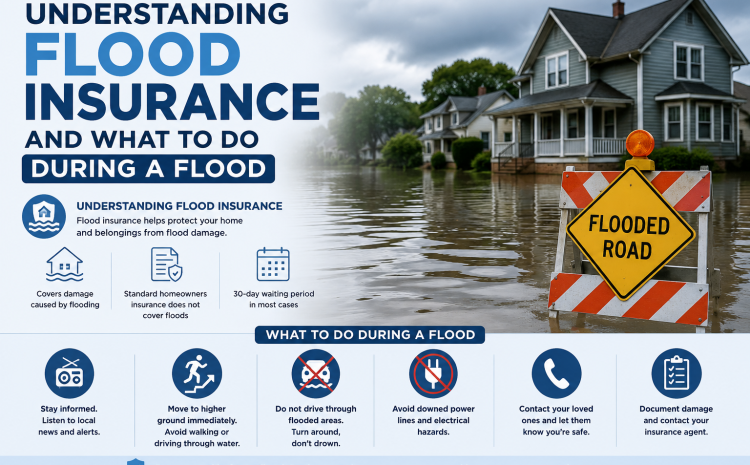
What to Do During a Flood
If a flood is imminent or already occurring, safety must come first. Here’s what to do:
- Stay informed. Monitor local news, weather alerts, and emergency broadcasts for updates and evacuation orders.
- Move to higher ground immediately if you’re in a flood-prone area or under an evacuation order.
- Avoid walking or driving through floodwaters. Just six inches of moving water can knock you down, and two feet can sweep away a vehicle.
- Turn off utilities if instructed and it’s safe to do so — shut off electricity, gas, and water to prevent further hazards.
- Avoid contact with floodwater. It may be contaminated with sewage, chemicals, or debris.
- Keep emergency supplies accessible, including your phone, charger, medications, and important documents in a waterproof container.
- Follow instructions from local authorities regarding shelters and evacuation routes.
What to Do After a Flood
Once the water recedes and it’s safe to return, take these steps:
- Wait for official clearance before re-entering your home or neighborhood.
- Document the damage thoroughly with photos and videos before beginning any cleanup.
- Contact your insurance provider as soon as possible to begin the claims process.
- Avoid electrical hazards. Do not turn on power until it’s been inspected and deemed safe.
- Clean and disinfect affected areas promptly to prevent mold growth.
- Keep receipts for any repairs, temporary housing, or supplies purchased due to the flood, as these may be reimbursable under your policy.
Why Choose Prolines Insurance Agency, LLC
Navigating flood risk and insurance options can feel overwhelming, especially during an already stressful time. That’s why having a trusted partner matters. Prolines Insurance Agency, LLC offers personalized Flood Insurance services designed to protect your home, belongings, and peace of mind. Our team works with you to assess your unique risk factors, compare NFIP and private flood insurance options, and build a policy that truly fits your needs and budget.
Beyond flood coverage, Prolines Insurance Agency, LLC provides a full range of Insurance services, helping individuals, families, and businesses find comprehensive protection against life’s uncertainties — all backed by knowledgeable agents who prioritize clear communication and dependable support.
Final Thoughts
Flooding can happen quickly, and its aftermath can be devastating both emotionally and financially. Understanding what flood insurance covers, knowing your risk, and having a clear action plan for before, during, and after a flood are essential steps toward protecting what matters most.
Don’t wait until the forecast turns severe to think about coverage. Reach out to Prolines Insurance Agency, LLC today to explore flood insurance options and other insurance services tailored to safeguard your home and your future.