
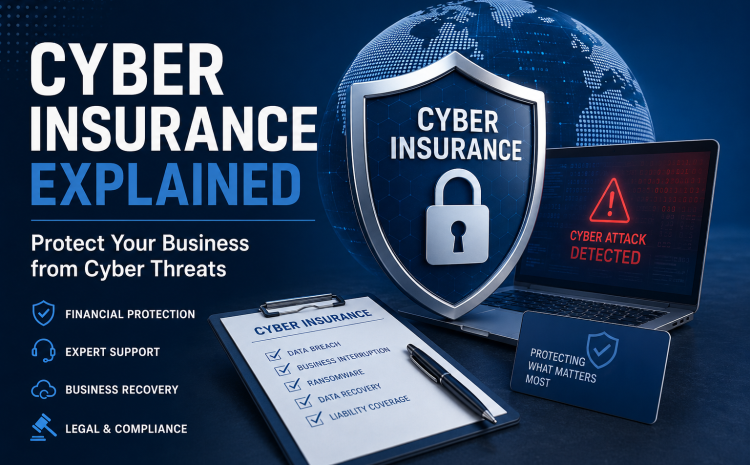
Cyber Insurance Explained: Protect Your Business from Cyber Threats
Every business that touches a computer, a network, or the internet is a potential target for cybercrime. From ransomware attacks that lock up entire databases to phishing scams that trick employees into wiring company funds, cyber threats have become one of the most pressing risks facing organizations of every size. While firewalls, antivirus software, and employee training are essential first lines of defense, they cannot guarantee complete protection. This is where cyber insurance steps in — a specialized policy designed to help businesses recover financially and operationally after a cyber incident.
This article explains what cyber insurance is, why it matters, what it typically covers, and how to choose the right policy for your business.
What Is Cyber Insurance?
Cyber insurance, also known as cyber liability insurance, is a type of coverage that helps businesses mitigate the financial fallout from cyberattacks and data breaches. Unlike general liability insurance, which covers physical damages and bodily injury, cyber insurance is tailored specifically to digital risks — things like data theft, network damage, business interruption caused by an attack, and the legal costs of responding to a breach.
Think of it as a safety net that activates when your digital defenses fail. It won’t stop a hacker from breaking in, but it can cover the cost of cleaning up the mess, notifying affected customers, restoring lost data, and defending your business against lawsuits or regulatory penalties.
Why Cyber Insurance Matters
1. Cyberattacks Are Increasing in Frequency and Cost
Ransomware, phishing, business email compromise, and supply chain attacks continue to rise year over year. Small and mid-sized businesses are particularly attractive targets because they often have weaker security infrastructure but still hold valuable customer data.
2. The Financial Impact Can Be Devastating
A single data breach can cost a business far more than just the ransom or stolen funds. Expenses can include:
- Forensic investigation to determine how the breach happened
- Legal fees and regulatory fines
- Customer notification and credit monitoring services
- Public relations efforts to repair brand reputation
- Lost revenue due to downtime
- Potential lawsuits from affected customers or partners
Without insurance, these costs come directly out of the company’s pocket, which can be enough to bankrupt a small business.
3. Regulatory and Compliance Pressure
Many industries are now subject to data protection regulations (such as GDPR, HIPAA, or state-level privacy laws) that impose strict requirements — and steep penalties — for mishandling data breaches. Cyber insurance can help cover the cost of compliance failures and legal defense.
4. Business Partners and Clients May Require It
Increasingly, vendors, clients, and partners require proof of cyber insurance before signing contracts, especially in industries handling sensitive data like healthcare, finance, and technology.
What Does Cyber Insurance Typically Cover?
Cyber insurance policies vary by provider, but most fall into two broad categories: first-party coverage and third-party coverage.
First-Party Coverage
This protects your own business directly and typically includes:
- Data breach response costs – forensic investigation, customer notification, credit monitoring
- Business interruption – lost income and extra expenses while systems are down
- Cyber extortion – ransomware payments and negotiation costs
- Data recovery – restoring or recreating lost or corrupted data
- Reputation management – PR support to manage the aftermath of a breach
Third-Party Coverage
This protects your business against claims made by others as a result of a cyberattack, including:
- Legal defense costs – if customers, partners, or regulators sue your company
- Regulatory fines and penalties – costs associated with non-compliance
- Media liability – claims of defamation, copyright infringement, or privacy violations tied to online content
- Settlements and judgments – costs from lawsuits related to the breach
What Cyber Insurance Does NOT Typically Cover
It’s important to understand the limitations of cyber insurance. Most policies exclude:
- Losses from known vulnerabilities that were never patched
- Attacks resulting from poor security practices or negligence
- Future lost profits or reputational damage beyond what’s specified
- Physical damage to hardware (usually covered by property insurance)
- Losses from acts of war or state-sponsored attacks (in many policies)
Always read the policy’s exclusions carefully, as coverage gaps can leave your business exposed in critical moments.
How to Choose the Right Cyber Insurance Policy
1. Assess Your Risk Profile
Consider the type of data you handle, your industry’s regulatory requirements, your reliance on digital systems, and your history of past incidents. A healthcare provider handling patient records has very different risks than a small retail shop.
2. Understand Policy Limits and Sublimits
Policies often have an overall coverage limit as well as sublimits for specific types of claims (like ransomware payments or notification costs). Make sure the limits align with your potential exposure.
3. Review the Claims Process
Look into how quickly the insurer responds to claims, whether they provide access to incident response teams, and what documentation is required. A policy is only as good as its ability to deliver help when you need it most.
4. Check for Required Security Standards
Many insurers require businesses to have baseline security measures in place — such as multi-factor authentication, regular backups, and employee training — as a condition of coverage. Failing to meet these standards could result in denied claims.
5. Compare Multiple Providers
Get quotes from several insurers and compare not just price, but the scope of coverage, exclusions, and reputation for handling claims fairly.
Steps to Strengthen Your Cyber Risk Posture (Beyond Insurance)
Cyber insurance works best as part of a broader risk management strategy, not a replacement for good security practices. Consider:
- Implementing multi-factor authentication across all systems
- Regularly updating and patching software
- Conducting employee training on phishing and social engineering
- Performing regular data backups stored offline or in secure cloud environments
- Developing and testing an incident response plan
- Conducting periodic security audits and penetration testing
Insurers often view businesses with strong security practices more favorably, which can translate into better premiums and broader coverage.
Conclusion
Cyber insurance has become an essential component of modern business risk management. As cyber threats grow more sophisticated and frequent, having a policy in place can mean the difference between a manageable setback and a catastrophic financial loss. By understanding what cyber insurance covers, recognizing its limitations, and pairing it with strong internal security practices, businesses can build a resilient defense — one that protects not just their systems, but their reputation, their customers, and their future.
Investing in cyber insurance today is not just a financial decision; it’s a strategic move toward long-term business continuity in an increasingly digital world.